What does ISO 12215 cover?
ISO 12215 is a series of small-craft hull construction and scantling standards. Part 5 addresses local design pressures, design stresses and structural sizing for covered craft. It is not a general certificate that a yacht is safe or approved.
For an owner or builder, the first step is to agree which parts and other rules apply to the vessel, then provide the geometry, loads and material information needed for the calculations. This guide is a planning overview, not a replacement for the standard or a vessel-specific engineering assessment.
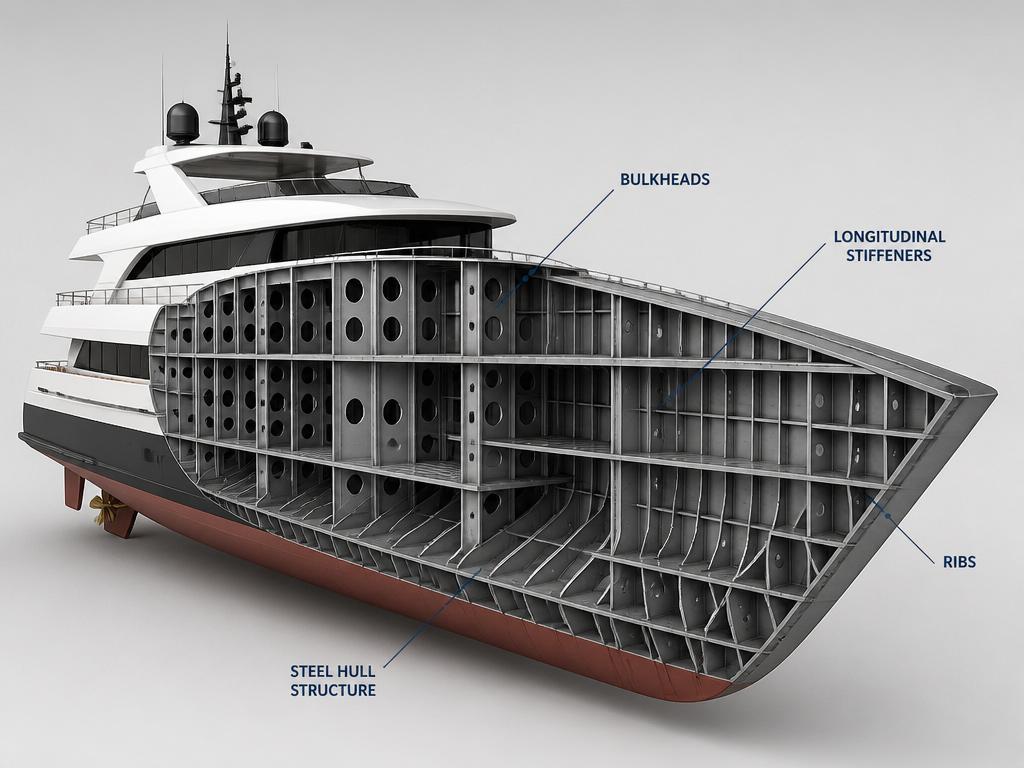
Does ISO 12215-5 apply to my vessel?
The ISO 12215-5:2019 scope covers monohull small craft with a hull length or load line length up to 24 m. It includes recreational craft, recreational charter vessels and covered small commercial craft and workboats, with additional provisions for those commercial applications.
- Check the length definition, hull configuration, intended use and construction material against the actual standard.
- Professional racing-only craft are excluded from Part 5's stated scope.
- Multihull local pressures and stresses are addressed in ISO 12215-7; do not apply a monohull pressure basis without checking the relevant parts.
- Flag, operating area, commercial duty and class or statutory requirements may introduce other criteria. Applicability is not established by vessel length alone.
What are hull scantlings?
Scantlings are the dimensions and structural specifications used to define a hull's load-carrying structure. Depending on the construction, these include plating or laminate thicknesses, stiffener sections, panel spans and supporting members.
Structural sizing connects the design pressure and stress basis with the selected material properties and geometry. A thickness copied from another boat is not a substitute for checking the proposed vessel's loads, unsupported spans, connections and construction method.
What should an owner or builder provide?
- Vessel definition
- Hull geometry, dimensions, hull configuration, general arrangement, intended use and operating conditions.
- Loading and performance basis
- Design loading conditions, displacement, speed assumptions and equipment loads relevant to the structural assessment.
- Material and construction data
- Proposed steel or aluminium grade, laminate or sandwich specification, or other covered construction system, supported by appropriate material data.
- Structural layout
- Panel boundaries, frames, stiffeners, bulkheads, openings, connections and equipment support locations.
- Review responsibilities
- Applicable rule editions, authority requirements, drawing list, calculation deliverables and who handles submission and revisions.
Missing inputs should be recorded as assumptions for agreement, not silently treated as verified facts. The pre-design checklist helps organise the wider project brief.
How does a structural assessment become drawings?
- Confirm the vessel scope, applicable standards and agreed design basis.
- Define the hull structure, materials, panel spans and load paths.
- Determine the relevant pressures and design stresses, then assess the structural members using the applicable methods.
- Coordinate openings, supports, connections and other structural details with the arrangement and systems.
- Record assumptions and results, issue the agreed calculations and drawings, and handle review comments within the commissioned scope.
Our structural design and construction documentation scope describes possible inputs and deliverables. It is proposal-specific, not a fixed package or a promise of authority approval.
Does a scantling calculation mean the vessel is approved?
No. Structural calculations address the agreed structural scope. They do not by themselves demonstrate stability, systems compliance, construction quality or acceptance by a class society or statutory authority.
ISO's Part 5 scope refers to ISO 12217 for stability, freeboard and buoyancy considerations and to other ISO 12215 parts for rudders, appendages and rig loads. Coordinate those assessments where applicable. See the stability and hydrostatics scope and the materials planning guide for related considerations.
Source and scope limits
The scope statements above are based on ISO's public description of ISO 12215-5:2019 — design pressures for monohulls, design stresses and scantlings determination. Consult the applicable full standard and corrections before carrying out calculations; this overview does not reproduce its formulas or tables.
It does not establish that ISO 12215 applies to every yacht, nor that this studio or any illustrated vessel holds a certification. Exact calculations, submissions and revision support must be agreed for the project.
Discuss your structural design scope
Share your intended use, hull information, material proposal and required deliverables for a project-specific discussion.